 May
04
May
04
Tags
Hemingway by the Sea
Ernest Hemingway acknowledged the four years as the Toronto Star’s European correspondent honed a talent for writing. Submitted over 80 articles on a range of topics and from many locations, his articles and letters during on Europe show the early growth of one of a talented american writer.
The following article is of the much beloved Spain his brief incounter with the fishermen sparked the following article published on February 18, 1922, in the newspaper’s weekend magazine supplement (Toronto Star Weekly).
TUNA! Fishing in Spain
Vigo is a pasteboard looking village, cobblestone streets, white and orange plastered, set up on one side of a big, almost land-locked harbour that is large enough to hold the entire British Navy. Sun-baked brown mountains slump down to the sea like tired old dinosaurs, and the color of the water is as blue as a chromo of the bay of Naples.
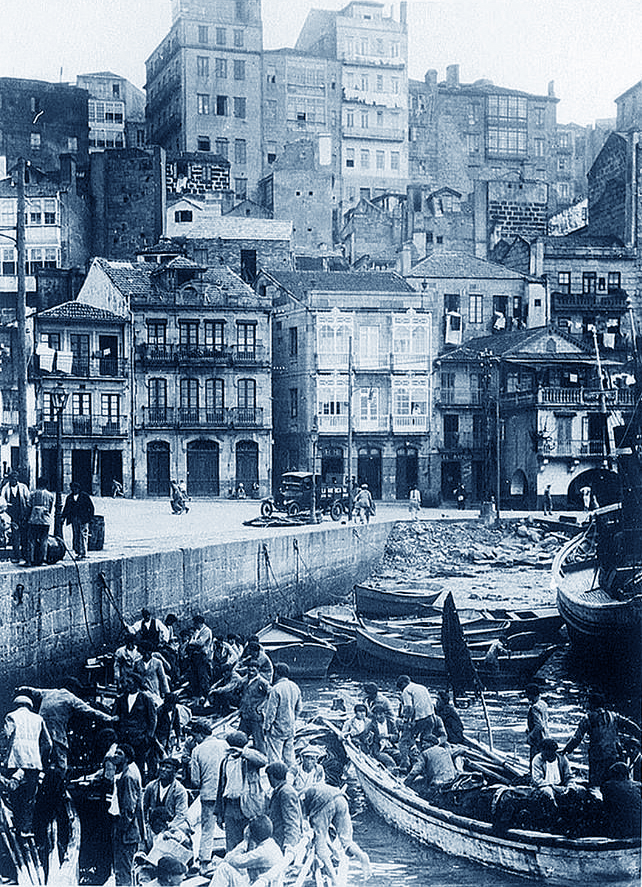
A grey pasteboard church with twin towers and a flat, sullen fort that tops the hill where the town is set up look out on the blue bay, where the good fishermen will go when the snow drifts along the northern streams and trout lie nose to nose in deep pools under a scum of ice. For the bright, blue chromo of a bay is alive with fish.
It holds schools of strange, flat, rainbow-colored fish, hunting packs of long, narrow Spanish mackerel, and big heavy-shouldered sea-bass with odd, soft-sounding names. But principally it holds the king of all fish, the ruler of the Valhalla of fishermen.
The fisherman goes out on the bay in a brown lateen sailed boat that lists drunkenly and determinedly and sails with a skimming pull. He baits with a silvery sort of amulet and lets his line out to troll. As the boat moves along, close hauled to keep the bait under water, there is a silver splatter in the sea as though a bushel full of buckshot had been tossed in. It is a school of sardines jumping out of the water, forced out by the swell of a big tuna that breaks water with a boiling crash and shoots his entire length six feet into the air. It is then that the fisherman’s heart lodges against his palate, to sink to his heels when the tuna falls back into the water with the noise of a horse driving off a dock.
A big tuna is silver and slate blue, and when he shoots up into the air from close beside the boat it is like a blinding flash of quicksilver. He may weigh 300 pounds and he jumps with the eagerness and ferocity of a mammoth rainbow trout. Sometimes five and six tuna will be in the air at once in Vigo Bay, shouldering out of the water like porpoises as they herd the sardines, then leaping in a towering jump that is as clean and beautiful as the leap of a well hooked rainbow.
The Spanish boatmen will take you out to fish for them for a dollar a day. There are plenty of tuna and they take the bait. It is a back-sickening, sinew-straining, man-sized job even with a rod that looks like a hoe handle. But if you land a big tuna after a six-hour fight, fight him man against fish when your muscles are nauseated with the unceasing strain, and finally bring him up alongside the boat, green-blue and silver in the lazy ocean, you will be purified and be able to enter unabashed into the presence of the very elder gods and they will make you welcome.
For the cheerful, brown-face gods that judge over the happy hunting grounds live up in the old, crumbly mountains that wall the bright, blue bay of Vigo. They live there wondering why the good, dead fishermen don’t come to Vigo where the happy hunting grounds are waiting.
His article illustrates a talented journalist with a literary skill as a storyteller. The experience no doubt set a hook for a later the novel ‘Old Man and the Sea’ published in 1952, and a passion for saltwater fishing.
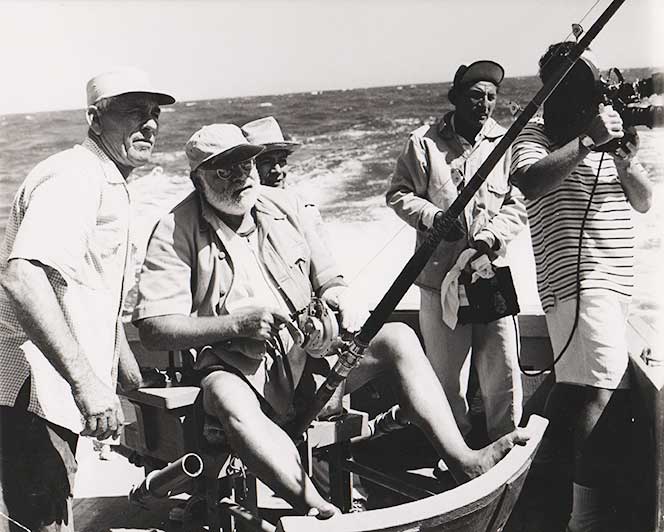
By 1934 four books were published (The Torrents of Spring, The Sun Also Rises, Farewell to Arms and Death in the Afternoon), contributing to his true passion for fishing and the commissioning the construction of a 38-foot long wooden boat from Wheeler Shipyards of Chicago, Illinois, he named ‘Pilar’.
Today the metropolitain area of Vigo is home to 10 times the number of people during Hemingway’s short visit. The small harbour has grown into the world’s largest fishing port and home to inovative ship builders.
Four Vigo must do experiences:
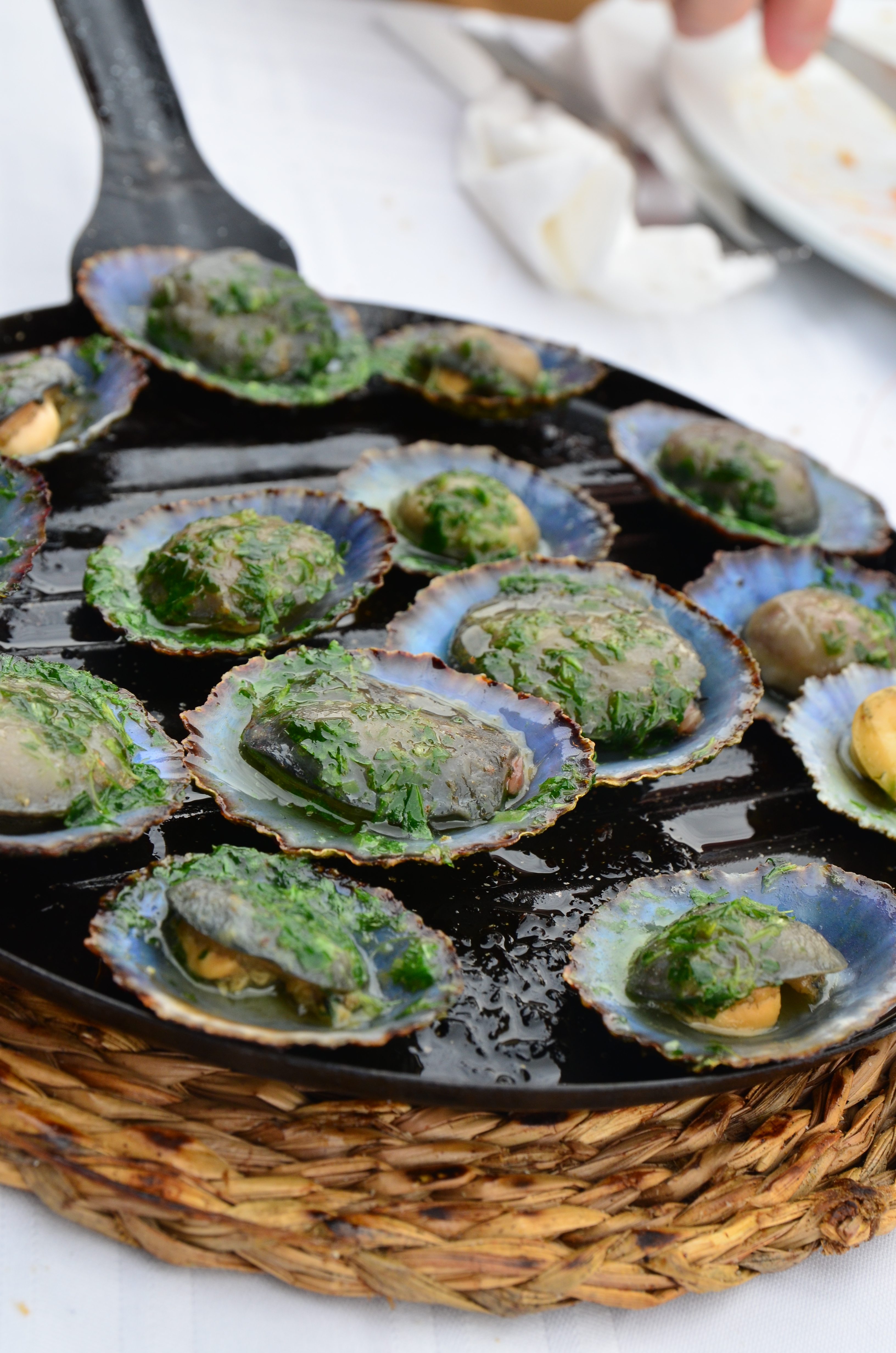
1. The essential gastronomic experience is found not in a restuarant, but along calle de las ostras (Oyster or Pescadería Street), where literally the soul of the city is served in oyster dishes prepared from stands lining the street. Even Hemingway couldn’t resist this simple tradition of purchasing directly from the sellers, then eating the fresh raw oysters with a little lemon or aloi oysters, united with a glass of southern Galicia acclaimed white wines, Albariño.
2. Travellers wanting to immerse themself in nature must visit Cíes Islands to explore the many hiking trails in the Atlantic Islands National Park to discover hidden beaches, photograph flora and fauna or experiencing the immensity of the Atlantic from one of the Island’s lighthouses. The best beach in the area is Rodas beach, over a mile in length it is protected seabeds and in a unique setting, with all the necessary facilities to make it a comfortable day. The Island is accessible by boat adding that Hemingway ocean journey experince to the mouth of the Vigo estuary.
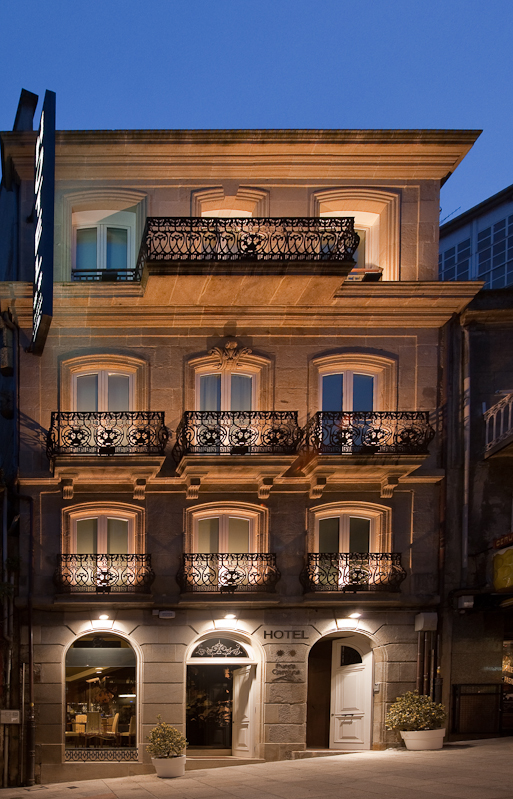
3. Sure, Hemingway never slept in Vigo, but little doubt if he had, a place near the port to watch the fishing boats. Hotel Puerta Gamboa, is a boutique hotel located in the old town and just 50 meters from the marina. The building in itself is an architectural treasure, completely renovated to respect of the essence of its time and uses noble wood and stone material throughout its common areas and 11 rooms. The original balconies on the facade of granite maintian a unique character and individuality.
4. The seaside neighbourhood of Bouzas, the rhythm of life slows down to perhaps a pace Hemingway experienced. When a more relaxed past allowed him to strolling through the Old Town, along its cobbled stoned streets toward one of the most beautiful views of the Vigo bay. The town is also full of lively cafe and restuarant terraces making this a perfect location to watch the sunset while sampling some traditional tapas: small fried fish, mussels, clams, razor-shells… or the popular empanada (fish or meat pie).
 TravelKorner
Pingback: El rico emigrante | El octopus larpeiro