 April
25
April
25
2014 WTTC Award Winners
We have highlighted here five of the six winners from the 18 finalists of 2014 Tourism for Tomorrow Awards from the six categories. In our previous coverage the winner of the Environment award is Jetwing Vil Uyana. This year’s finalists range from local destinations to global hotel groups, international airlines, luxury tour operators and small eco-lodges. Award applications were received from 56 countries, representing all continents. The winners of 2014 Tourism for Tomorrow Awards were announced at the WTTC’s annual Global Summit, taking place in Hainan, China, 24 April 2014.
Community Award: Arviat Community Ecotourism, Canada
The indigenous Inuit people of Arviat received a sum of money under a land claim agreement relating to Federal Conservation Areas, they invested it in their future, by creating a sustainable, community led tourism product. The community of Arviat is located on the remote shores of Nunavut’s Hudson Bay and Arctic archipelago in Canada, reached only by plane or boat.
Nunavut is Canada is one of the world’s most sparsely populated regions and home to the Inuit for over four thousand years. Arviat is profoundly steeped in tradition of rich cultural fusion of Ahiarmiut, Paadlimiut and Avilingmiut peoples creating a unique heritage, that is at the core of their tourism offer.
The strong cross community and stakeholder participation in developing its tourism product, started with ecotourism training, planning and extensive capacity building in areas such as accommodation, nature interpretation, cuisine, performance, marketing and guiding. They sought out experts such as Parks Canada which trained eight guides, and ArtCirq (the worlds’ only Inuit circus) which came in to lead cultural workshops.
In January 2011 Arviat Community Ecotourism (ACE) welcomed its first who immersed themselves in ancient Inuit history, culture and traditions, with guided tours to the National Historic Sites of Arvia’juaq and Qikiqtaarjuk, ancestral home to the Paalirmiut Inuit for hundreds of years. One key element is the professional cultural performance group, named ‘Qaggiqtiit’, comprised of twelve performers including ayahyah singers, drum dancers, throat singers and harp players. The other is cultural interpretive programmes staged in a handcrafted caribou skin tent, ‘Tupiq’ (the local word for tent), combining storytelling, history, and interpretation and demonstration of artefacts and historical tools and implements.
The community also is involved in the nature tourism sector with a variety of guided tours such as the caribou migration, whale watching and polar bear migration. ACE now employees 30 – 35 residents and generates more than CAN$160,000 annually for the community. The hope is to replicate it in other parts of Nunavut, as a tourism product wholly owned by its people.
Business Award: Asilia Africa, Tanzania
Entering its tenth year of business, Asilia Africa proves that community, conservation, capacity, certification and commitment are the core principles of running a successful organization.
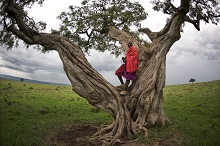 Asilia is comprised of thirteen properties in Tanzania, Kenya and Mozambique, and employing over 600 staff, 95% of African nationality and 30% employed locally. Asilia understood early that unless conservationists, community members and business experts work hand in hand there would be no future for sustainable safari businesses.
Under Asilia’s guidance in regions which where defined as critical conservation areas, in which wildlife was severely under threat and local economic prospects are rapidly diminishing, have now begun to flourished. Naboisho private conservancy in Kenya, which has protected 200sq. kilometres within an important wildlife corridor in the Mara-Serengeti ecosystem with no tourism income before 2010, now generates close to CAN$1.1M through tourism.
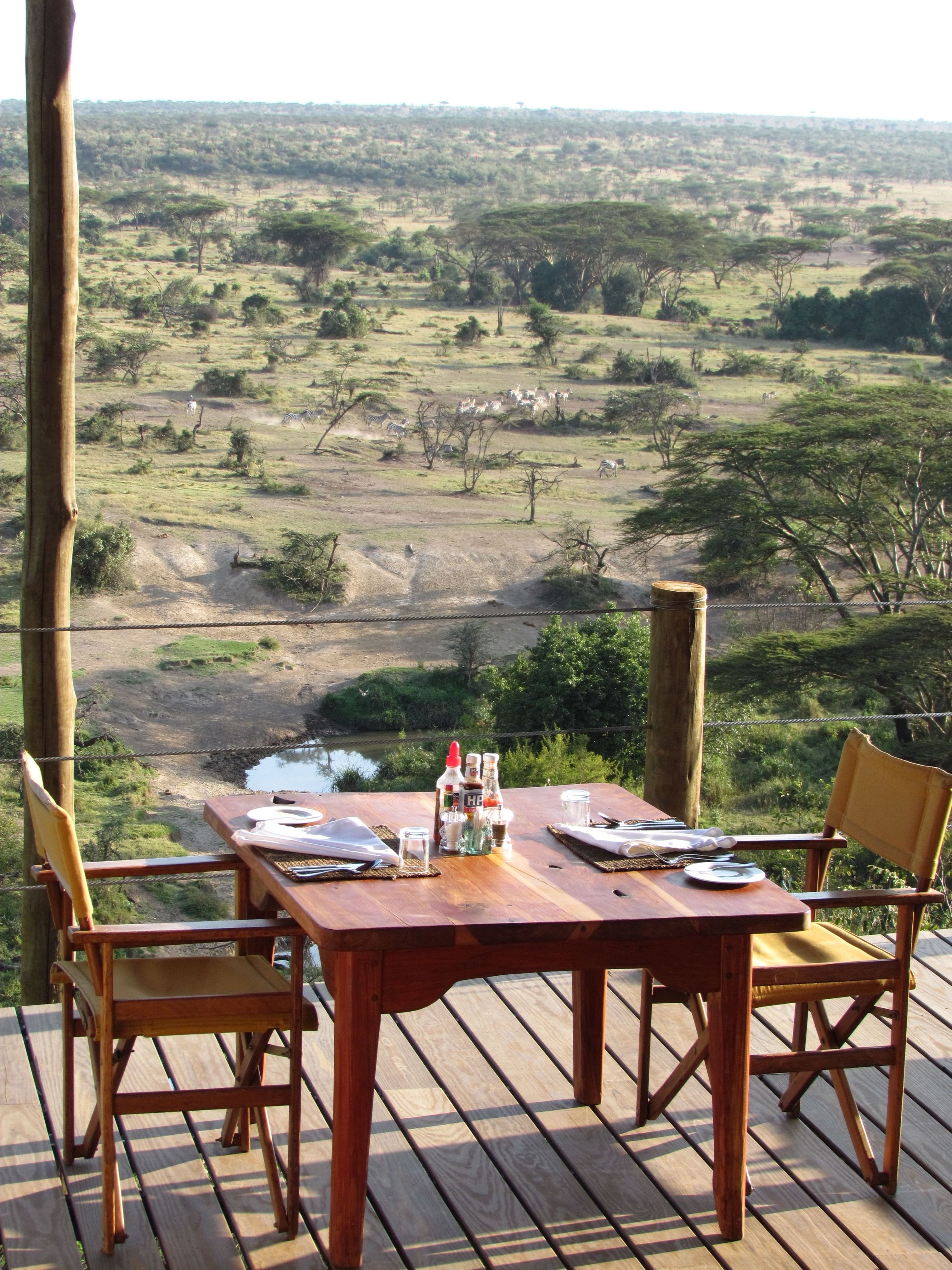 Asilia not only monitors and manages its resources and waste, using solar energy, practising minimum waste programmes and carbon offsetting, it also sources camp most supplies locally, and supports local programmes such as the Koiyaki Guide School, which trains the Maasai youth in ethical and sustainable guiding practices, and provides internships to students of the school.
Education is key to conservation and Asilia spends 4% of their HR costs on staff training and development in addition to supporting Tanzanian education charities such as the Kamitei Foundation and Interpretive Guides Society. Asilia’s actions are reflected in their high rating from both the Global Impact Investing Ratings System and B Corporation, ensuring its status in a growing community of socially and environmentally aware companies to watch, learn from and invest in.
Destination Award: Temes S.A. – Costa Navarino, Greece
In order to have a clear direction, it helps to have a captain at the helm, and Costa Navarino had just that. Messinia region of Greece, was the home of Captain Vassilis Constantakopoulos who, following his business prowess in the shipping industry, sought to invest in protecting his beloved land. Although he passed away in 2011, His early charting a course lead to creating high-end and sustainable tourism facilities, continues today to steer the company he created, Temes S.A.
At the core of Temes’ philosophy since its beginnings in 2006, is respect for Messinia’s nature, rich cultural heritage and local communities. Comprised of mixed-use resorts integrating deluxe hotels, signature golf courses, spas, conferences and sport, promoting the destination had always been under one brand, Messinia. Partners share, Constantakopoulos understanding that by injecting long term investment into infrastructure, cooperation with local communities and the environment, in which eco practices accounting for ten per cent of development budgets success is the destination.
Temes developed one of the largest photovoltaic facilities in Greece, which not only supplies all of Costa Navarino’s electricity needs but feeds back to the national grid, backed up by a giant geothermal installation. On the green side, Temes initiated the largest olive-tree transplanting program in Europe, as well as planting 6,000 indigenous trees and 200,000 endemic shrubs.
Costa Navarino launched a monitoring and protection programme for the loggerhead sea turtle in partnership with the NGO Archelon, contributing to a program in the Gialova Lagoon (a Natura 2000 site) to protect the habitat of the only European population of the African chameleon. Navarino Natura Hall is one of Costa Navarino’s latest developments. An interactive nature and environment centre, it is aimed at educating local schoolchildren on the region’s natural heritage. They also funded the Navarino Environmental Observatory together with Stockholm University and the Academy of Athens, which is dedicated to Mediterranean environmental research.
Constantakopoulos’ early charting for sustainable environmental practices combined with business accoutrements has succeeded in protecting valuable habitat while creating, during peak tourism season, employment for more than a thousand people of which 70% live in Messinia.
People Award: Lao National Institute of Tourism and Hospitality, Laos
Laos may be landlocked, sharing borders with five countries: Burma, Cambodia, China, Thailand and Vietnam, yet inside the country all boundaries are opening to tourism.
Although, three quarters of the Lao population reside in rural areas, living from subsistence agriculture, new education programmes are being developed to offer opportunities in the growing tourism sector. Catering to that demand is the Lao National Institute of Tourism and Hospitality (LANITH).
Established in 2008, LANITH seeks to transform an industry and the future economic growth of one of Southeast Asia’s emerging nations. Laos tourism is growing, and with substantial investment in training aimed at unskilled workers and tourism professionals, Laos’ tourism industry is aiming to maximise service and product capacity to catch-up to its neighbours.
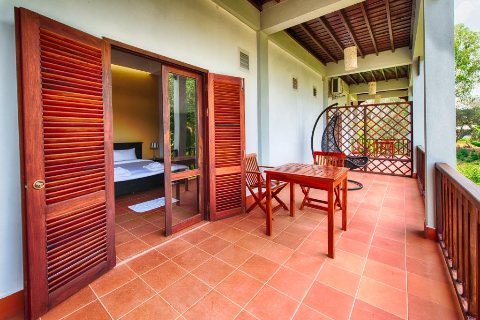 Two key training branches are offered, a two year Diploma in Tourism and Hospitality, which first began in June 2012 as a pilot program with roughly 300 students and now has a new college in Vientiane, supported by bursaries from Luxembourg Development (LuxDev). In 2013 the curriculum was formally accredited by the Lao Ministry of Education and Sports , becoming the first such course of its kind in Laos.
The Passport to Success training program is the second branch that reaches out to workers already in the tourism industry, the biggest industry training program in Laos, the program offering short vocational courses in areas such as customer service, kitchen management and food production. To date, nearly a thousand hospitality and tourism staff have studied subjects covering customer service, food and beverage operations, management and communications.
At its training centre in Luang Prabang, students using The Passport to Success program train and also to operate its four guest rooms, a restaurant and bar, training kitchens and a meeting room; as a social enterprise generating revenue that can be reinvested into LANITH.
LANITH has a guiding belief for strict inclusion of minority and disadvantaged groups in its programs, such as funding bursaries for low income students. Building a tourism industry with structured accredited training programs, not only builds optimism for the young people. With fifty per cent of the country’s population under twenty years old, Laos is establishing the foundation for investment and the future of prosperous tourism economy.
Innovation Award: Ecosphere, India
Mountain travel company Ecosphere’s holistic approach is for, “the great legacy of the Himalayas to thrive so that future generations can equally savour its beauty and bounties”. Ecosphere, a social enterprise located in the Spiti Valley of India’s trans-Himalayas region. Although this 4,000 metres high altitude cold desert region has a short tourist season, its steeped cultural traditions influenced by a immense natural heritage that turned their day to day life into innovative, extraordinary tourism experience.
Since 2002 Ecosphere has been developing tourism as a serious, alternative and sustainable source of income for the local community. As Buddhism is at the heart of the community and culture, any economic solution would need to provide protection to the environment which was a key element for Ecosphere’s solution.
Designing unique nature led products, for example, Ecosphere revived the ancient art of mud pottery, an indigenous skill that had, until recently, been forgotten. Training five potters and building necessary facilities where both local people and visitors can practise the craft, Ecosphere not only revived an art form, they created an additional community income.
Spiti is also famous for its fossils, by creating replicas for sale to the tourists, the potters have slowed the depletion of this natural artefacts, while enabling Ecosphere to set up a Fossil Museum to preserve the remaining geological wealth.
Natural medicine in Himalayan is of interest to tourists wanting to understand the ancient practices. This has allowed, in Buddhist terms, an ‘awakening’ for guests, and a ‘reawakening’ for the practitioners, or Amchis.
Ecosphere offers Monastic visits, strengthening this link between Buddhism and tourism in Spiti. Homestays are also offered on a rotation basis to ensure equitable distribution of funds. There are eighty homestays in six villages generating between 20 to 25 per cent of the average family income. With 10% of the revenue being reinvested with matching funds from Ecosphere, in conservation and sustainable farming projects, as nominated by the villagers. Such as the building of green houses for vegetable growing and renewable energy plants.
Ecosphere is about creating a conscious culture for visitors, and one of their most innovative steps has been a ‘sensitisation’ video which reminds tourists how to travel responsibly. The array of Himalayan daily life experiences that has become vibrant part of the Ecosphere offer for traveller seeking the real an authentic, creating true value for visitors, while showing villagers that they as well as the world can appreciate what is on their doorstep.
 TravelKorner
You must be logged in to post a comment.